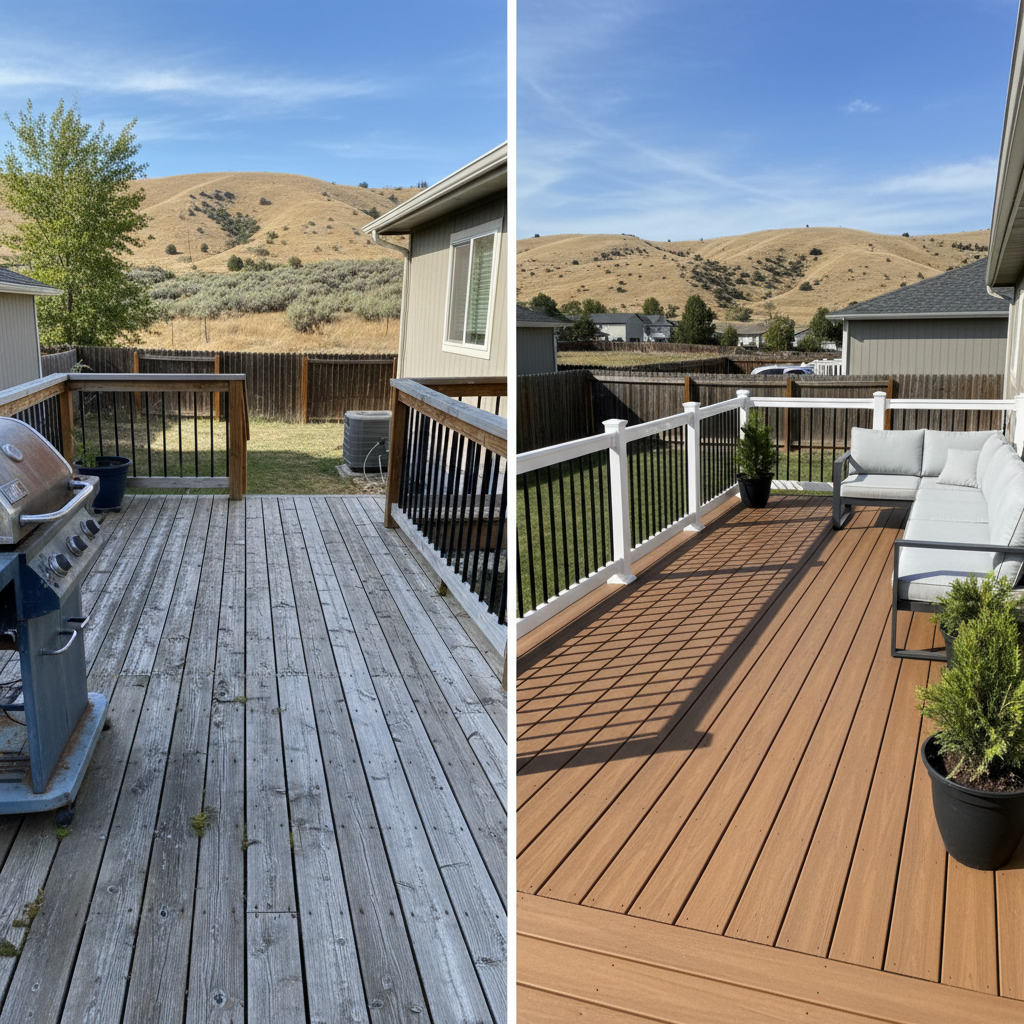
Alright, let's talk composite decks. You've probably heard they're low maintenance, look good, and last a long time. All true. But not all composite is created equal, and if you're looking at putting one in your backyard here in Richland, you're going to run into two main types: capped and uncapped.
It's not as complicated as it sounds, but knowing the difference can save you headaches and money down the road. I've installed plenty of both, and I've seen how they hold up in our Tri-Cities weather, from those scorching 100-degree summers to the occasional icy winter.
What's the Big Deal with 'Capped' Anyway?
Think of capped composite decking like a candy bar with a hard shell. The core of the board is still that mix of wood fibers and plastic, just like traditional composite. But then it's got a super durable, all-plastic layer wrapped around it – usually on three or four sides. This 'cap' is made of different polymers, often PVC or polyethylene, and it's fused right onto the core during manufacturing.
This cap is the real hero. It's what gives the board its fantastic resistance to fading, stains, scratches, and even mold and mildew. It's essentially a protective shield. Most of the premium composite brands you hear about today – Trex Transcend, TimberTech Azek, Fiberon Horizon – these are all capped products. They're designed to look great and stay that way with minimal effort.
And 'Uncapped' Composite?
Uncapped composite, sometimes called first-generation composite, is what started it all. It's just that blend of wood fibers and plastic, extruded into a board. No fancy outer shell. It was a huge step up from wood back in the day because it didn't rot, splinter, or need staining every year.
However, because it's exposed, the wood fibers in uncapped composite can still absorb some moisture. This means it's more susceptible to things like mildew growth, staining from spilled BBQ sauce or red wine, and some fading over time. It's not bad, but it requires a bit more elbow grease to keep it looking pristine compared to its capped cousin.
Let's Talk Dollars and Sense (Cost)
Here's where the rubber meets the road for a lot of folks. Generally speaking, uncapped composite is going to be your more budget-friendly option upfront. It's less material and a simpler manufacturing process, so the cost per linear foot is lower.
Capped composite, with its advanced technology and protective layer, costs more. You're paying for that enhanced performance and longevity. For a typical deck in a place like Badger Mountain, the difference could be several thousand dollars on the total project, depending on the size and design. It's a bigger initial investment, no doubt about it.
Durability and Maintenance: The Real Difference Maker
This is where capped composite really shines, especially for us here in Richland. Our summers are brutal. Intense sun, high UV exposure. That cap layer on a capped board is specifically engineered to resist fading and UV degradation. It also makes the board virtually impervious to spills and scratches. You can spill a glass of wine, wipe it up later, and it's like it never happened.
Uncapped composite, while durable against rot and insects, will show its age more quickly. It'll fade more noticeably over time, and if you spill something, you need to clean it up fast or you might have a permanent stain. You might also see mildew spots forming in shaded areas, especially if your deck doesn't get much direct sun. You'll likely need to power wash it annually, maybe even use a special deck cleaner to keep it looking fresh.
With a capped deck, a simple hose-down and occasional sweep is usually all you need. That's a big win for busy homeowners who'd rather be enjoying their deck than cleaning it.
Appearance: Looks That Last
Both types of composite come in a variety of colors and wood grain patterns. Early uncapped composites sometimes looked a bit 'plastic-y' or uniform. Modern capped composites have really stepped up their game. They often feature multi-tonal streaking, deeper grain patterns, and matte finishes that mimic natural wood incredibly well. The cap also allows for more vibrant and consistent colors that hold up much better against our intense sun.
Over time, an uncapped deck will likely lose some of its original color vibrancy and might develop a more weathered look. A capped deck will retain its 'new' look for much longer, which is a big part of its appeal.
My Recommendation for Richland Homeowners
Look, if budget is your absolute top priority and you're okay with a bit more cleaning and a deck that will show its age sooner, uncapped composite is a viable option. It's still better than wood for many reasons.
However, for most homeowners in Richland, especially considering our climate, I strongly recommend going with a high-quality capped composite deck. The initial extra cost is almost always worth it in the long run. You'll get:
- Superior fade resistance against our harsh sun.
- Excellent stain and scratch protection, perfect for families and entertaining.
- Significantly less maintenance – more time enjoying, less time cleaning.
- A deck that looks fantastic for decades, maintaining its curb appeal and value.
When I build a deck for a client through Skyline Decks Richland, I want them to be thrilled with it for years to come, not just when it's new. Capped composite delivers on that promise better than anything else on the market right now. It's an investment in your home and your lifestyle that truly pays off.