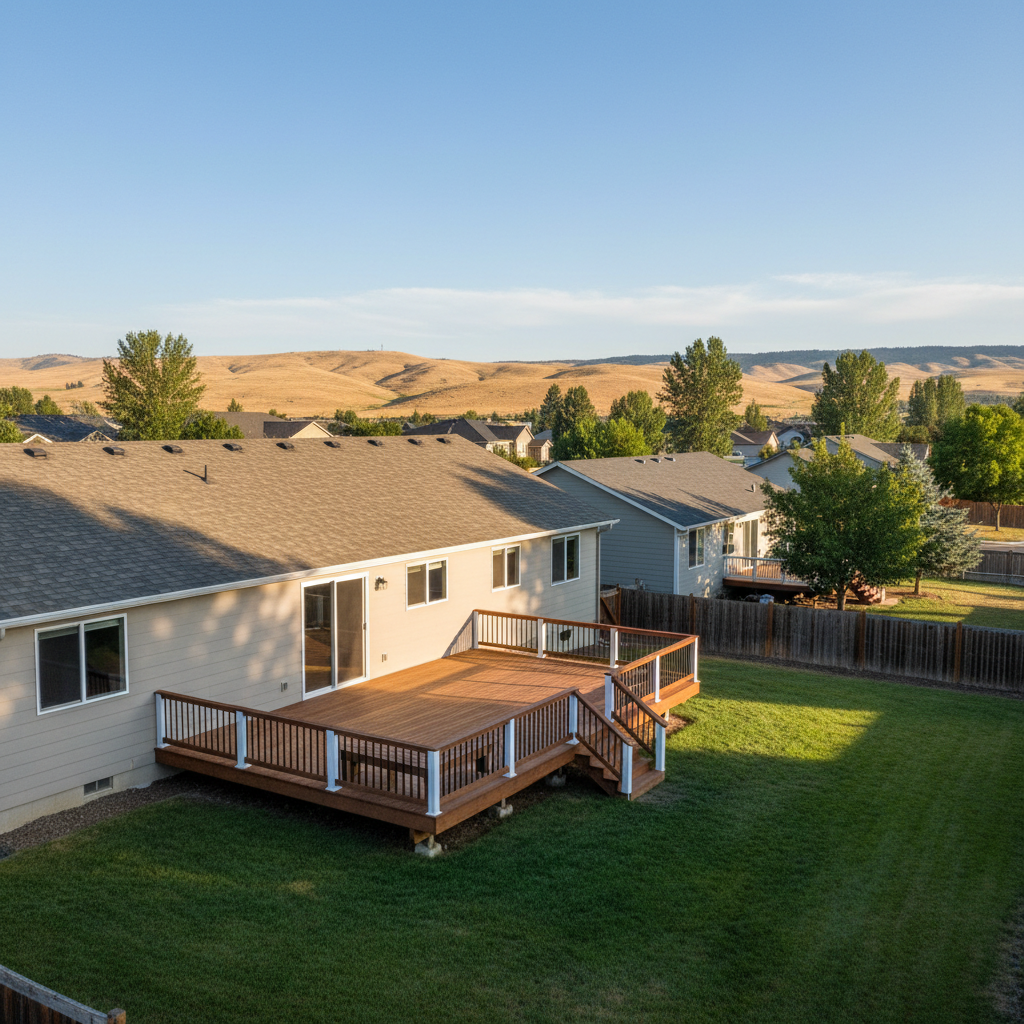
So, you're dreaming of a new deck, right? You've probably spent hours scrolling through pictures, maybe even picked out colors, and debated between composite or good old wood. All that fun stuff is important, absolutely, but here's the thing many people miss — and it's a huge one: the ground your deck actually sits on.
Around here in Richland, our soil isn't quite like the dirt you'd find in, say, Seattle or Spokane. We've got our own unique quirks and benefits, and if your deck builder isn't clued into that, well, you could be looking at some real headaches down the road. I've seen it happen too many times.
Our Richland Soil: Not Your Average Dirt
Most of Richland, especially in places like Badger Mountain South or those charming older neighborhoods near the river, sits on something called loess soil. It's basically a very fine, silty, wind-blown deposit. Sounds a bit fancy, doesn't it? What it really means for your deck is that it can be incredibly stable when it's dry. But, and this is a big "but," it's also prone to erosion and settling if it's not handled just right, especially with our occasional heavy rains or if there's any sort of water problem. Plus, we've got areas packed with sand and gravel from the old riverbeds. This stuff drains beautifully, no doubt, but it can also be less compact, meaning you might need deeper footings to hit solid ground.
When you're building a deck, you can't just dig a shallow hole, plop in a concrete form, and call it done. That's practically an invitation for a wobbly deck, uneven steps, and eventually, some serious structural issues. Your deck's foundation absolutely has to be designed for what's underneath it. That means really understanding the local soil conditions, knowing precisely how deep to dig for those footings, and figuring out what kind of concrete and rebar reinforcement will keep everything rock-solid.
Why Footings Aren't a One-Size-Fits-All Deal
Every deck needs footings — those concrete pillars that go into the ground and hold up the posts. But the size and depth of those footings? That's not just a guess. A few things determine it:
- Your deck's size and weight: A small, ground-level deck won't need the same beefy footings as a big, elevated one with, say, a hot tub.
- The load it'll carry: Are you just planning to put out a couple of chairs, or are you envisioning a big family gathering spot complete with heavy planters and a grill?
- Most importantly, the soil's bearing capacity: This is where our local soil really comes into play. Some soils can handle more weight per square foot than others. If your soil has a lower bearing capacity, you'll need wider or deeper footings to spread that weight out effectively.
Here in Richland, we often run into expansive soils in certain spots. What does that mean? It means the soil can swell up when it gets wet and shrink when it dries out. This can put a ton of stress on foundations if they aren't designed correctly. You need footings that are deep enough to get past that active zone, or maybe even bell-shaped ones to resist any uplift. Without that kind of local knowledge, you're basically just crossing your fingers, and hope, as we all know, isn't a very good construction strategy.
Local Expertise: More Than Just a Catchphrase
This is precisely why working with a local deck builder who truly gets Richland's specific challenges is so crucial. We've built decks all over this town, from the charming older homes in north Richland to the shiny new developments on the south side. We know exactly what to look for when we start digging those first holes. We're also familiar with what the city's building codes require for footings, which, by the way, are often based on those local soil conditions.
When Skyline Decks Richland takes on a project, we're not just looking at your backyard; we're considering the whole picture, including everything that's under the surface. We'll make absolutely sure your deck's foundation is solid, built to last through our hot summers and those occasional wet winters, and designed to meet every local regulation. It's all about building it right the first time, so you can just enjoy your outdoor space for years without ever having to worry about it sinking or shifting. What a concept!
Don't let your dream deck turn into a nightmare just because someone took a shortcut on the foundation. Make sure to ask your builder about their approach to footings and how they factor in our local soil. A good builder will have a clear, confident answer, believe me.