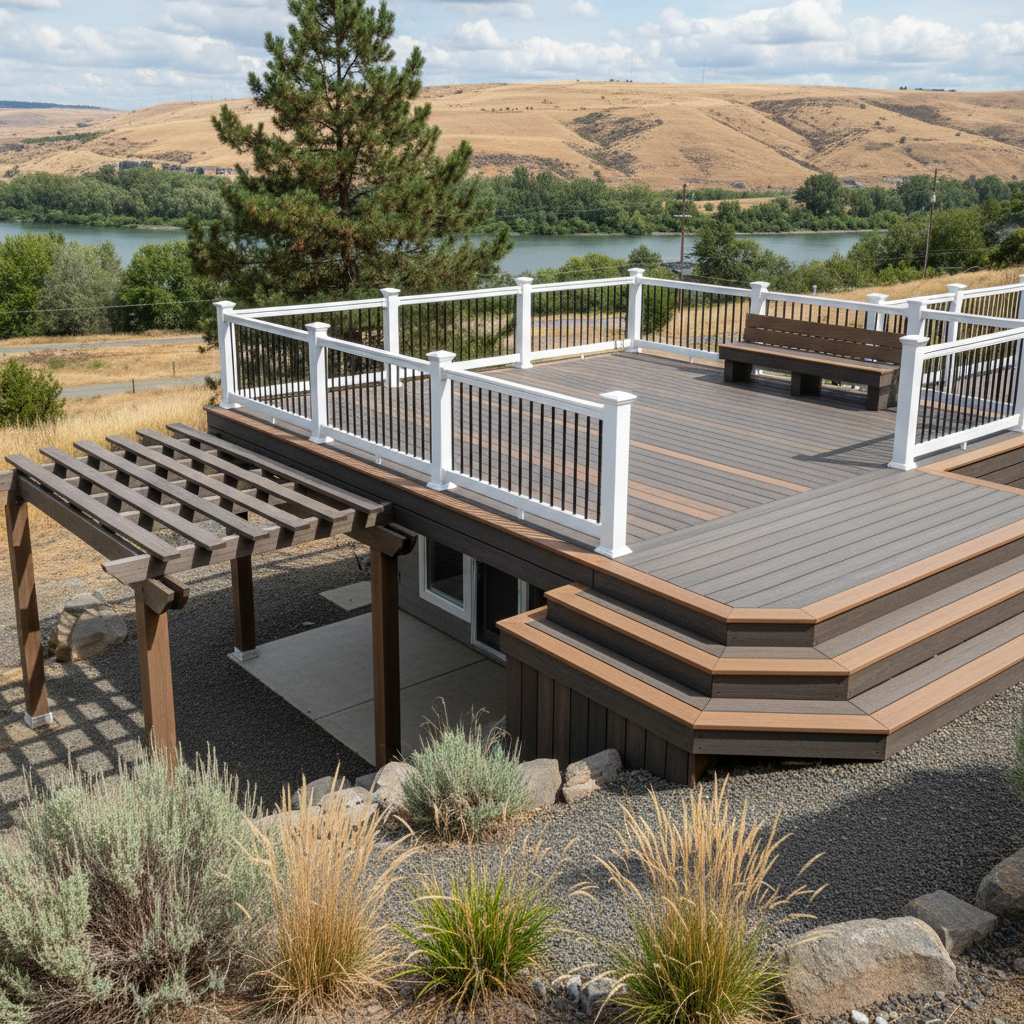
You're ready for a new deck, maybe a Trex deck, because you've heard good things about low maintenance and durability. That's smart. But I've seen a lot of folks in Richland, especially out in areas like Badger Mountain South, make some pretty common blunders when they're planning these projects. And trust me, you don't want to be one of them.
Mistake #1: Not Understanding the Full Cost Picture
Everyone focuses on the square footage price for the decking material itself. That's natural. But a Trex deck isn't just a pile of boards. You've got the substructure – the framing underneath. This is critical. If your contractor is cutting corners here, using undersized joists or cheap fasteners, you're going to have problems down the road. A wobbly deck, sagging spots, or worse. We're talking about a structure that needs to hold up to our crazy Tri-Cities winds and the weight of people, furniture, and snow.
Then there's the labor. Good, experienced builders cost more because they know what they're doing. They're insured, they pull permits, and they build to code. If someone gives you a quote that's significantly lower than everyone else, ask yourself why. Are they skipping permits? Are they using cheap labor? Are they even licensed and insured? It's not worth saving a few bucks upfront if you end up with a headache or a deck that fails inspection.
Mistake #2: Ignoring the Substructure Material
This goes hand-in-hand with cost, but it's so important it deserves its own point. Just because you're using Trex decking doesn't mean your substructure has to be wood. In fact, I often recommend steel framing for Trex decks, especially for larger or elevated designs. Why? Steel won't rot, warp, or twist like wood can. It's incredibly stable, which is perfect for composite decking that needs a consistent, flat surface to perform its best. Wood can move, and that movement can sometimes telegraph through to your Trex boards, leading to uneven gaps or even fasteners popping up over time. Yes, steel costs more upfront, but it's a true 'build it once, build it right' solution that complements the longevity of Trex perfectly.
Mistake #3: Forgetting About Drainage and Water Management
Richland might be a desert, but we still get rain, and sometimes a lot of it. And when you build a deck, especially one attached to your house, you've created new surfaces for water to interact with. I've seen decks built right up against a house with no thought given to how water will drain off. You end up with water pooling against your foundation, which is a recipe for rot, mold, and even foundation issues. Any good deck builder, like us at Skyline Decks Richland, will talk to you about proper flashing, grading, and maybe even a drainage system underneath your deck if you're planning on using the space below it. Don't let a contractor just slap a deck on without considering where the water's going to go.
Mistake #4: Not Thinking About Future Use and Layout
This one's about vision. You might just want a place to put your grill now, but what about next year? Do you want a dining area? A fire pit? A hot tub? If you don't plan for these things from the start, you might end up with a deck that's too small, has an awkward layout, or can't support the weight of that hot tub you decided you wanted later. It's much cheaper and easier to build it right the first time than to try and add on or modify a deck later. Think about how you live, how you entertain, and what you want your outdoor space to be in five years, not just five months.
Don't rush into your Trex deck project. Do your homework, ask tough questions, and make sure your contractor is thinking about more than just putting boards down. It'll save you a lot of grief and money in the long run.